


In diesem Artikel

Safety meets style – because your head deserves only the best. Studies show that a Helmet can reduce the risk of injury in the event of an impact by up to 80 percent – and that’s a pretty convincing argument for wearing a helmet, right?
In Germany there is still no requirement to wear a helmet, but the impressive thing is that with a 75 percent share, children are the ones who use bicycle helmets the most. Time for us adults to set an example! No matter whether you're just going to the supermarket or planning an extensive mountain bike tour - your head should always be protected. But which helmet is the right one and what should you pay attention to when buying a bicycle helmet? Let's find out together!
The different types of helmets: the right protection for every riding style
First, you should consider what terrain you will primarily be riding on. Accordingly, different helmet variants are suitable.
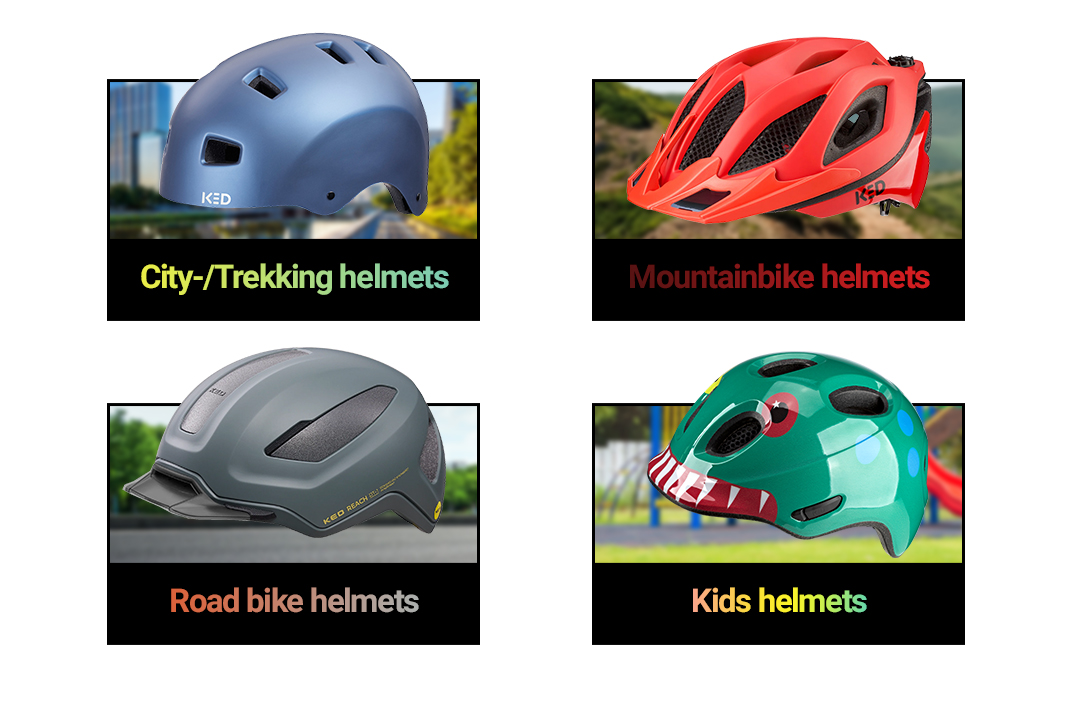
City and trekking helmets: The all-rounders for everyday life
City and trekking helmets, also known as urban helmets, offer protection, usually in a simple and chic design. These helmets are the perfect companions for the daily commute to work or relaxed bike rides at the weekend. They have modern safety standards and, with their subtle look, adapt well to normal to sporty outfits.

Mountain bike helmets: robust for off-road use
Are you a passionate MTB rider? We can understand this only too well, but caution is required. Because in hardly any other area is the risk of falling as high as on a mountain bike. A suitable mountain bike helmet is therefore an absolute must. MTB helmets are usually built a little more robustly and offer extended protection for the back of the head.
Trail and all-mountain helmets are perfect for the majority of mountain biking activities. These are usually cut deeper, especially at the back of the head, in order to protect this area as well. For extreme operations, there are full-face helmets that also protect your face and jaw with the chin bar.
Buy racing bike helmets: aerodynamics meets safety
Road bike helmets are on maximum aerodynamics and optimized for minimal weight. They usually have more ventilation openings and a more elongated shape to reduce air resistance. Perfect for anyone who loves high speed!
The sophisticated ventilation ensures a pleasant head temperature even during intensive training sessions, while the reduced weight prevents fatigue during long distances. Many models have special aerodynamic features such as retractable ventilation openings or streamlined rear sections.
Children's helmets: safety with a fun factor
The highest level of safety is important, especially when it comes to the little ones. Therefore, all of our protect Helmet your child's head perfect, in different, colorful designs and motifs!
An additional LED light on the back of the helmet ensures good visibility in traffic. The helmet shells are significantly smaller here and the motifs and colors are more childish. It is also important that children's helmets usually have less complex adjustment systems - after all, putting them on and taking them off should be easy, even for small hands. Many models are also equipped with extra soft padding that protects sensitive children's skin.
The most important criteria when buying a bicycle helmet
We'll show you what you should pay attention to when buying a bicycle helmet.
1. The right size – the be-all and end-all of safety
Measuring head circumference made easy: To measure your head circumference correctly, take your tape measure and measure the circumference approx. 2 cm above your eyebrows. If you don't have a tape measure at hand, you can use a thread that you can measure later with a ruler.
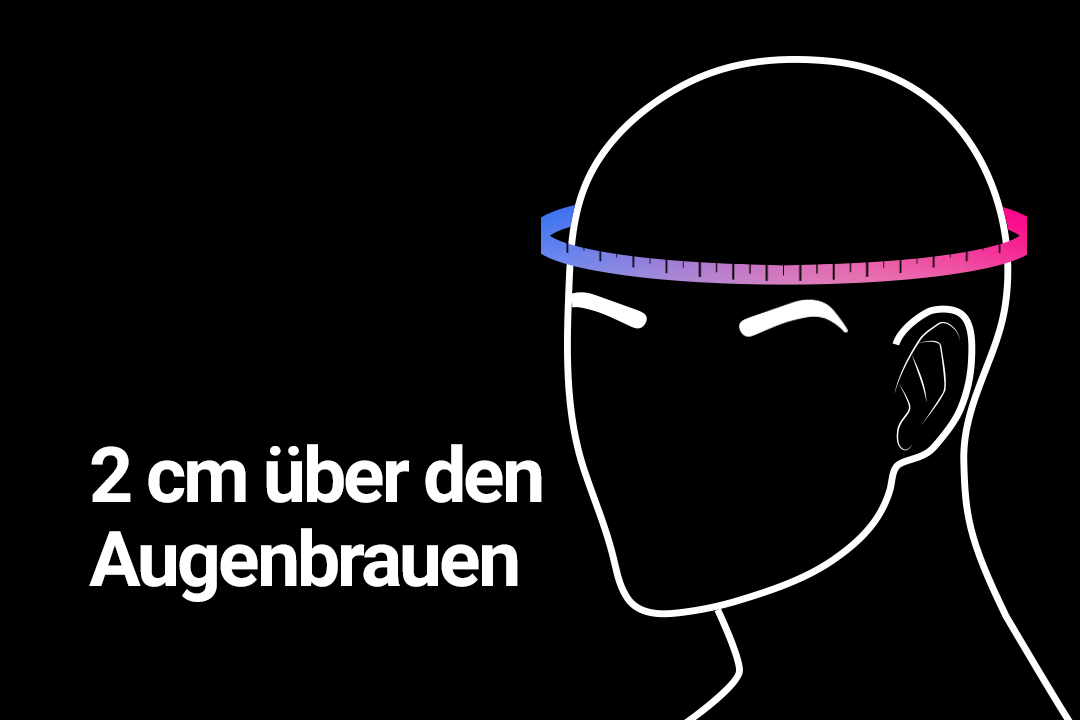
The helmet should now rest against your head without any pressure. Now let's get down to business: close the chin strap and shake your head. The helmet should not wobble or slip.

2. Safety standards and certifications
CE EN 1078: Like so many things, bicycle helmets sold in the European Union are standardized and must meet high material and safety standards. This standard is the minimum size for all bicycle helmets sold in Europe.
MIPS-Technology: The Multidirectional Impact Protection System is intended to provide additional protection against rotational forces. Also MipsAccording to Stiftung Warentest, technology doesn't help much - opinions differ here.
Test winners and awards: Check out the reviews from Stiftung Warentest, ExpertsTesten.de and ADAC.
3. Ventilation: For a cool head
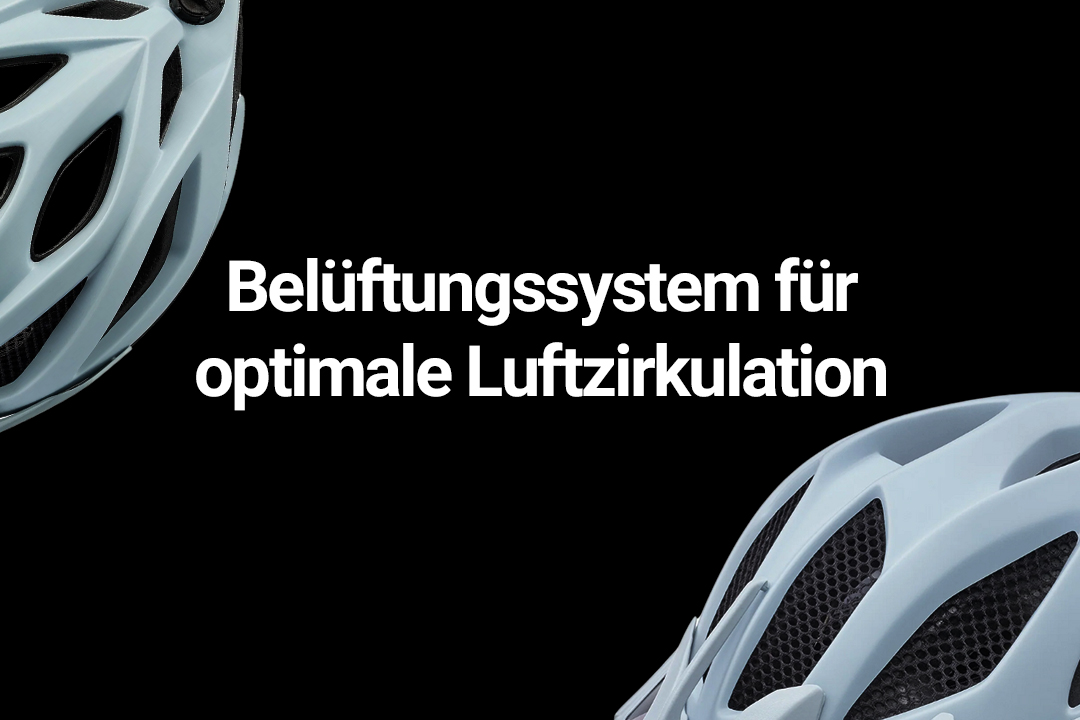
When buying, make sure you have a proper ventilation system, otherwise your head will quickly spin while driving. Modern helmets have strategically placed air inlets and outlets that ensure optimal air circulation.
Ventilation features:
- Front air intakes for fresh air
- Outlets at the back of the head for air evacuation
- Internal air channels for optimal circulation
- Insect protection nets in the ventilation openings
4. Weight and comfort
Lightweight helmets can be worn for longer and offer you a breezy, relaxed riding experience.
Comfort features:
- Washable foam pads for padding
- Infinitely adjustable adjustment system
- Soft chin straps without pressure points
- Antibacterial pads
5. Additional security features
Lighting and visibility:
- Integrated LED taillights
- Reflective elements
- Bright, eye-catching colors
Smart features:
- Bluetooth connectivity
- Turn signals and brake lights
- Crash detection with automatic notification
Materials and technologies: What's in the helmet?
Of course, when buying bicycle helmets you should also pay attention to the materials and technologies used.
In-Mold-Technology
At the In-Moldtechnology, the helmet impresses with an extremely safe construction with optimal ventilation and ventilation. The outer polycarbonate shell is directly connected to the EPS-Foam bonded – this makes the helmet lighter and safer.

EPS-Foam: impact protection
The EPS-Foam (Expanded Polystyrene) is the heart of every helmet. The provides impact protection In-Mold-Technology with the high quality EPS-Foam. In the event of an impact, this foam deforms and absorbs the energy.
Modern locking systems
The magnetic Fidlock helmet closure system impresses with its simplicity and security and makes putting on and taking off the helmet child's play.
Special requirements: E-bike & S-Pedelec helmets
Because you can ride faster on your e-bike than on a bicycle, e-bike helmets undergo different safety tests. You should therefore always pay attention to the NTA 8776 standard. This assures you that your desired helmet will adequately protect you even at higher speeds. The same applies to S-Pedelec helmets, which must also comply with the NTA 8776 standard.
Fitting and fit: This is how the helmet fits perfectly
First put the bicycle helmet on with the chin strap open and adjust it to your size. On most helmets this works via a small wheel at the back of the head.
The 5-point checklist:
- Fit: The helmet lies horizontally on the head (not on the neck!)
- Strap: The straps should run underneath the ear - this provides additional support
- Strength: Under no circumstances should the bicycle helmet wobble - the head is then not protected
- Comfort: No pressure points, but still firm
- Glasses: Wear your sports glasses/sunglasses when trying on the helmet
Price ranges: The right helmet for every budget
Beginner area (40-60 euros)
- Basic safety standards met
- Easy ventilation
- Perfect for occasional riders
Middle class (60-120 euros)
- Better ventilation systems
- Higher quality materials
- Advanced adjustment options
Premium area (120+ euros)
- Innovative technologies (MIPS, etc.)
- Ultralight materials
- Smart features
- Integrated lighting
Where to buy? Online vs. specialist retailers
Advantages of specialist retailers
- Personal advice
- Try-on option
- Direct size comparison
- Professional attitude
Advantages of buying online
- Greater selection
- Direct price comparison
- Detailed product descriptions
- Customer reviews
Conclusion: Buy a bicycle helmet and protect your head
A good bike helmet is not a chore, but an investment in your safety and comfort. Make sure you buy a bike helmet that meets your needs. And remember: the fit of your helmet is crucial, as is the quality and standard. You can wear lightweight helmets with good ventilation for longer and more comfortably.
We believe that safety and style can go hand in hand. So: Helmet on and off the bike! Your head will thank you - and you'll look really good too.
Safety first, style comes second, but both together? Simply unbeatable!


